You can open your panel door, see all the lights on in your Dallas home, and still be standing in front of one of the most failure-prone electrical panels ever sold in the United States. A Federal Pacific panel can look clean, the breakers can flip on and off, and everything can seem fine on the surface. The real danger sits inside the breakers, where they often refuse to trip when your wiring needs protection the most. That is what turns an old panel into a hidden safety problem.
Many Dallas homeowners and property owners first hear the words “Federal Pacific” during a home inspection, an insurance renewal, or a real estate deal. The report might flag your panel as a hazard, or your insurer might say coverage depends on replacing it. From your point of view, that can feel confusing and frustrating, especially if the panel has “worked” for decades without a problem and no one has brought it up before. It can sound like people are overreacting to a brand name instead of what is actually happening inside the panel.
We have seen that situation play out across Dallas since ElectricMan opened in 2004. Our family-owned company is led by a Master Electrician with more than 35 years of field experience, and our licensed, background-checked technicians have opened hundreds of Federal Pacific panels in real Dallas homes and businesses. In this article, we want to explain why these panels underperform, why they no longer align with today’s Dallas code expectations, how insurers and inspectors actually treat them, and what it looks like to upgrade to a safer, code-compliant system.
Why Federal Pacific Panels Are a Hidden Problem in Dallas Homes
Federal Pacific Electric (FPE) panels were widely installed from the 1960s into the early 1980s. That lines up with a huge wave of residential construction around Dallas, when subdivisions grew quickly and builders used whatever panels were common in the supply chain. As a result, we still find FPE Stab-Lok panels in older neighborhoods across the metro area, tucked into garages, closets, utility rooms, and exterior walls. Many owners have no idea what brand of panel they have, much less that Federal Pacific carries a long history of performance problems.
Because these panels are buried in the electrical system, most people only discover them when something triggers a closer look. A home inspector might flag “Federal Pacific panel present, recommend evaluation by licensed electrician.” An insurance company might send an inspector before binding or renewing a policy, then come back with a list of required corrections that includes panel replacement. To a homeowner who has never had a major electrical issue, that can feel like sudden bad news that seems disconnected from everyday experience in the home.
The crucial distinction is this. Electrical systems can appear to “work” while still failing basic safety benchmarks. Lights turning on does not mean breakers will trip correctly during an overload or short circuit. Old equipment might still pass current, but that says nothing about whether it meets present-day standards for overcurrent protection, grounding, and listing. Federal Pacific panels are a textbook example of that gap. Their problems are mostly latent, which means you only see the consequences when wiring overheats, insulation breaks down, or a breaker refuses to open during a fault.
When our team at ElectricMan evaluates an FPE panel in a Dallas property, we are not just looking for obvious burn marks or loose covers. We are thinking about decades of history, including independent testing that showed FPE breakers fail far more often than modern breakers, and we are thinking about how Dallas inspectors and insurers treat that equipment right now. Those factors together are what make Federal Pacific panels such a serious, but often hidden, issue compared to other older panels that have a better safety record.
How Federal Pacific Breakers Fail to Trip When Dallas Code Expects Them To
To understand why Federal Pacific panels underperform, it helps to know what a normal breaker is supposed to do. Every circuit in your home draws a certain amount of current. When that current rises above the breaker’s rating for too long, or a short circuit sends a rush of current down the wire, the breaker should automatically trip. Inside the breaker, thermal and magnetic devices sense the overload and open the contacts, cutting power before wires overheat or insulation fails.
Breakers follow what is called a trip curve. At a small overload, they are allowed to take longer to trip because the risk of immediate damage is lower. At a large overload or a short circuit, they must trip very quickly, often in a fraction of a second. Modern breakers are tested to strict standards so that their actual trip behavior matches this curve within tight tolerances. Dallas code, built on the National Electrical Code, assumes that overcurrent devices will perform reliably in this way and that a breaker with a certain rating will actually protect the wire it feeds.
Federal Pacific Stab-Lok breakers have a documented pattern of failing those expectations. One of the most serious issues is breaker lockup. In a locked-up breaker, the handle can move between “on” and “off,” but the internal contacts do not open properly during a fault. In other words, the handle might flip down, but the circuit remains energized inside. In some cases, FPE breakers have been shown to stay closed under overloads and short circuits that should have forced a trip, allowing dangerous heat to build in the wiring and panel while giving no outward sign of trouble.
Independent tests over the years found non-trip rates for certain FPE breakers that were significantly higher than acceptable industry levels. In plain language, a meaningful share of these breakers did not open when they should under test conditions. That failure undermines the most basic promise of a breaker, which is to protect the wiring and the structure, not just “carry current.” Our Master Electrician and technicians have seen the real-world version of those test results in Dallas homes, where circuits showed clear signs of overheating while the Federal Pacific breaker feeding them had never tripped.
This is where Dallas code comes into the picture. The code requires that overcurrent devices operate correctly and that equipment be listed and labeled for the way it is used. If a class of breakers has a long track record of failing to trip within required limits, and the manufacturer no longer supports or updates that design, inspectors and safety professionals no longer view that equipment as providing reliable protection. That is why an FPE panel can be called out as a problem even if it has not yet caused a visible failure. The risk lies in how it is likely to behave when a serious fault finally occurs.
The Heat and Arcing Risks Inside Federal Pacific Stab-Lok Panels
The problems with Federal Pacific equipment are not limited to the breakers themselves. The way Stab-Lok breakers connect to the panel bus bars creates its own set of hazards. Instead of clamping around a sturdy contact in a way that maintains strong pressure over time, Stab-Lok breakers stab into thin, finger-like bus connectors. As panels age and expand and contract with heat cycles, those connections can loosen or lose full contact area, especially if the panel has been overloaded or subject to vibration.
When a connection is no longer tight and clean, electrical resistance increases at that point. Resistance is the friction of electricity. The higher the resistance at a joint, the more heat it creates as current flows. A loose or marginal connection on a bus stab can run hot for years, slowly cooking the surrounding plastic and insulation. That heat can eventually lead to arcing, where current jumps through air gaps instead of flowing through solid metal, which is exactly the kind of condition that can start a fire inside the panel enclosure.
In Federal Pacific panels we inspect around Dallas, we often see telling signs of these issues. Bus bars with dark discoloration or pitting under certain breakers. Plastic around the breaker stabs that has turned brown, cracked, or started to melt. Breakers that feel unusually warm to the touch compared to neighboring devices carrying similar loads. Sometimes we find branch conductors with insulation that has become brittle right at the breaker connection, which points to long-term overheating at that point.
One of the most frustrating aspects for homeowners is that these conditions can exist while everything still appears to work. The breaker handle can flip on and off. The lights on that circuit still function. The average person opening the panel door will not see flames, so it is easy to assume all is well. What we look for as licensed electricians is the internal evidence that the panel’s bus and breaker interfaces are no longer providing safe, low-resistance connections. That kind of damage rarely improves on its own and usually gets worse with time and load.
Our safety-driven inspections at ElectricMan are designed to catch exactly these kinds of latent issues. We do not just glance at the label and close the door. We remove the panel cover, check the condition of the bus bars and breakers, and look for any signs of overheating or arcing. In Dallas, we repeatedly find that Federal Pacific Stab-Lok panels are overrepresented among the worst panel conditions we encounter, which lines up with their design weaknesses and long-term failure history compared to other brands of similar vintage.
Why Federal Pacific Panels Do Not Meet Today’s Dallas Code Expectations
Property owners often ask whether their Federal Pacific panel is “illegal.” The more accurate question is whether it meets today’s code expectations when the electrical system is evaluated or altered. Electrical code is not retroactive in the sense that every older home must be ripped apart, but when you replace a panel, upgrade service, or pull permits for major work, the installation is judged against the current code, not the rules from 40 or 50 years ago. That is when an FPE panel usually becomes an active problem, not just a background concern.
Modern codes rely on equipment being listed and labeled for its intended use by recognized testing labs. Federal Pacific’s history of failed breaker performance and related scrutiny has cast serious doubt on that listing status in practical terms. When a panel and its breakers have a long record of failing to do their main job, inspectors and safety professionals in Dallas do not view them as equivalent to modern, listed equipment, even if a label remains on the door. They see them as obsolete hardware that does not match current safety expectations.
Another factor is that safety expectations have advanced significantly since FPE panels were installed. In many Dallas homes with Federal Pacific panels, there is little or no arc-fault or ground-fault protection, grounding and bonding are outdated, and neutral and ground conductors may be terminated improperly inside the panel. Bringing a system in line with modern standards often means installing a new panel that can accept current breaker types and provide safe, organized terminations for all conductors and grounding components. A new panel also provides an opportunity to correct issues like double-tapped breakers, missing clamps, or undersized lugs that were common in older work.
In our day-to-day work securing permits and passing inspections in Dallas, we see a consistent pattern. When a Federal Pacific panel comes into play during permitted work, inspectors frequently note it as a safety concern and strongly recommend or require replacement as part of the project. The combination of documented trip failures, aged and overheated bus connections, and outdated overall system configuration makes it very hard to justify keeping that panel at the heart of a modernized electrical system. Inspectors want to see an electrical heart that matches the protections the current code assumes are in place.
At ElectricMan, we design panel replacement projects to meet current Dallas code requirements from the outset, so that inspectors can sign off with confidence. That usually means a modern, listed load center with properly sized breakers, corrected grounding and bonding, and room to support any additional protection the code calls for in that particular home or building. Replacing a Federal Pacific panel is not a cosmetic upgrade. It is about bringing the heart of the system back in line with what today’s code expects from safe electrical equipment and giving your wiring a fair chance to be protected when something goes wrong.
How Federal Pacific Panels Can Jeopardize Dallas Insurance Coverage
Even when a city inspector has not yet seen a Federal Pacific panel, an insurance company often will. Many insurers maintain internal lists of high-risk building materials and systems that have shown up repeatedly in claims. Federal Pacific panels are often on those lists along with other known-problem components. From the insurer’s point of view, a panel with a history of non-tripping breakers and overheating connections represents a fire risk they cannot easily quantify or control. That risk shows up in underwriting decisions, not just in theory.
That risk perception shows up in several ways in Dallas. Some insurers will refuse to write a new policy on a home or small commercial building until the Federal Pacific panel is replaced. Others will issue a conditional policy but give the owner a deadline to have the panel swapped out and proof of completed work submitted. In some cases, coverage renewals are denied unless the owner agrees to upgrade the panel as part of a broader list of safety corrections. Owners who have paid premiums for years can be surprised to see a renewal letter that suddenly puts the panel front and center.
We have been called many times by property owners who thought their home was ready to sell or refinance, only to be told by an insurer or lender that the Federal Pacific panel is a sticking point. The choice quickly becomes clear. Either replace the panel or risk losing a buyer, a loan, or insurance coverage. By that stage, the panel is no longer an abstract concern. It is directly affecting the transaction and the owner’s financial options in a way that is hard to ignore or postpone.
This is one of the reasons we emphasize that concerns about Federal Pacific panels are not just a sales tactic. Insurers handle large numbers of fire and electrical claims and track patterns over decades. When enough of those claims involve a certain product, that product ends up on the “we do not want to see this” list. In Dallas, that practical reality often means that an FPE panel must be replaced, not because an electrician wants to sell you something, but because insurers and underwriters are drawing a hard line around equipment that has a track record of underperforming in real-world conditions.
Our team at ElectricMan is accustomed to providing detailed invoices, photos, and permit information to show insurers and lenders that a Federal Pacific panel has been removed and replaced with a modern, code-compliant panel. By aligning the work with both Dallas code and typical insurance expectations, we help owners clear that obstacle and move forward with coverage or closing with fewer surprises tied to the electrical system.
Warning Signs Your Dallas Home May Have a Federal Pacific Panel
Before you can decide what to do, you need to know whether this issue applies to your property. Fortunately, Federal Pacific panels and breakers have some distinct visual clues. Inside or on the door of the panel, look for labels that say “Federal Pacific Electric,” “FPE,” or “Stab-Lok.” The Stab-Lok name in particular is a strong indicator, as it refers to the specific breaker and bus system associated with many of the documented problems and is often printed near the breaker layout diagram.
The breakers themselves also have recognizable features. Many FPE Stab-Lok breakers use red or orange handles, often in a style that looks different from the more squared-off handles on many modern panels. The arrangement of breakers, and the distinctive panel dead front design, can also help an experienced eye spot a Federal Pacific product quickly. However, not all FPE breakers are bright red, and not every red-handled breaker is FPE, so labels on the inside of the door are your best first check rather than relying on handle color alone.
If you are not sure what you are looking at, there are some safe steps you can take without removing any covers. Stand back, open the panel door, and use a flashlight to read the labeling. Do not remove the metal cover that hides the wiring and breaker bodies. That inner cover is there to keep you away from live parts, and taking it off should be left to a licensed electrician with proper tools and protective gear. If the labels are missing or illegible, that is another reason to bring in a professional who can identify the equipment by construction and layout.
Even if you find a clear Federal Pacific or Stab-Lok label and the panel looks clean, that does not mean it is safe or acceptable under current standards. Remember, the most serious FPE issues involve internal breaker mechanisms that refuse to trip and bus connections that overheat out of sight. Only a thorough evaluation by a licensed electrician can tell you the true condition of the panel and whether replacement is appropriate given your home’s age, loads, and future plans.
When our technicians from ElectricMan visit a Dallas home or business, they bring that trained eye and years of experience with them. All of our electricians are licensed, insured, and background-checked, and they know how to identify Federal Pacific equipment, document its condition, and explain in plain language what we find so you can make an informed decision about the next steps instead of guessing based on partial information.
What Replacing a Federal Pacific Panel in Dallas Really Involves
Once you decide to address a Federal Pacific panel, the next question is what the replacement process really looks like in a Dallas home or building. Panel replacement is not just a quick breaker swap. It is a coordinated project that involves permits, utility coordination, careful preparation, and detailed electrical work. Done properly, it brings the entire service and distribution point of your system up to today’s standards and removes a known weak link from your electrical system.
In a typical project, we start with a detailed evaluation of your existing panel and service. We confirm that it is an FPE panel, assess the condition of the bus bars and breakers, and identify any related issues, such as undersized service conductors or outdated grounding. We then design a replacement using a modern, listed load center sized appropriately for your current and future needs. For most Dallas properties, that design is submitted with a permit application so city inspectors know what work is planned and can review it against current code.
Once permits are in place and we coordinate with the utility, we schedule a day to perform the changeout. Power is shut off to the home or building while we remove the old Federal Pacific panel, move circuits into the new panel, and complete grounding and bonding upgrades. This is where hidden issues often surface, such as aluminum branch circuits that need special terminations, multiple conductors under a single lug, or damaged insulation that must be corrected to meet code. We address those findings on site so the new panel is not just newer, but also properly integrated with the existing wiring.
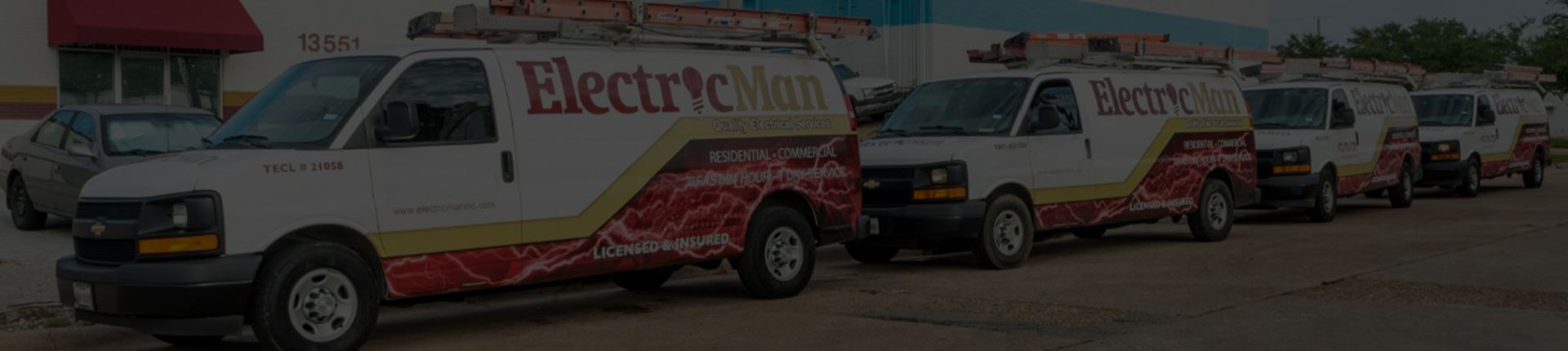
Our goal at ElectricMan is to complete as much of this work as possible in a single, well-planned visit. Our technicians arrive in well-stocked service vans with a wide range of breakers, fittings, and materials, which helps us handle surprises without leaving the job half finished. In many cases, power is restored the same day once the new panel is installed and safe to energize, and an inspector will then verify the work according to Dallas requirements. That coordinated approach reduces downtime for your home or business compared to a disorganized, piecemeal replacement.
Cost is naturally a big concern for owners facing panel replacement. The total investment depends on the size of the service, the number of circuits, the condition of existing wiring, and any related upgrades needed. We provide honest, upfront pricing tailored to your specific home or building, and we offer flexible financing options and special offers to make the project more manageable. What you gain in return is a modern, code-compliant electrical heart for your property and a clear path past the code and insurance barriers that Federal Pacific panels commonly create.
When Dallas Property Owners Should Act on a Federal Pacific Panel
Not every Federal Pacific panel requires the same level of urgency, but very few should be left on an indefinite “someday” list. If you notice clear warning signs such as a panel that feels hot to the touch, a smell of burning plastic near the panel, visible discoloration around breakers, or a main breaker that trips and behaves oddly when you try to reset it, you should treat the situation as urgent. In those cases, turning off suspect breakers and calling a licensed electrician immediately is the safest move while you avoid putting more load on compromised equipment.
Even without obvious symptoms, there are strong reasons to act proactively. If you are planning a remodel, adding new circuits, or upgrading HVAC equipment, it usually makes sense to address an FPE panel at the same time. The same is true if you expect to sell in the next few years or if you are switching insurance carriers. Replacing the panel before it becomes a deal breaker can save you from last minute delays and rushed decisions during a sale or refinance, when schedules are tight and choices are limited.
The longer a Federal Pacific panel remains in service, the longer you are relying on breakers and bus connections with a known track record of failure. Meanwhile, codes and insurance requirements continue to tighten, which rarely makes an old panel easier to live with. Acting on your own timeline, rather than waiting for an inspector or insurer to force the issue, gives you more control over scheduling, budgeting, and the exact solution you choose. It also reduces the chance that the first sign of trouble will be an overheated conductor or a policy notice instead of a planned upgrade.
At ElectricMan, we combine family-first values with a safety-driven approach, and we back our services with a satisfaction guarantee. If you know or suspect that you have a Federal Pacific panel in your Dallas home or building, we can inspect it, explain what we find in clear terms, and help you plan a replacement that fits both your safety priorities and your budget. You get more than just a new panel. You get a clear, documented improvement you can show to inspectors, insurers, buyers, and anyone else who needs to see that the issue has been resolved.
Talk With a Dallas Electrician Who Knows Federal Pacific Panels
Federal Pacific panels are not just another old brand. Their breaker design, bus connections, and documented failure rates put them at odds with how Dallas code and insurers expect an electrical system to perform today. A panel that appears to work can still allow dangerous heat to build, fail to trip during a fault, and create problems every time an inspector or underwriter looks at your property. Leaving that risk in place is a choice, but it is often a costly one over time.
If you are tired of wondering whether your panel is a ticking time bomb or worried about an inspection or insurance deadline, we can turn that uncertainty into a clear plan. Our team at ElectricMan has replaced many Federal Pacific panels across Dallas, and we know how to evaluate your system, navigate permits and inspections, and install a modern, code-compliant panel with as little disruption as possible. A straightforward conversation now can save you stress, delays, and risk later.
Call (972) 362-1804 to schedule a Federal Pacific panel evaluation or replacement in Dallas.