Converting a brick-and-steel Dallas warehouse into a sleek office or restaurant can feel like a dream project, right up until the new electrical code turns that dream into a stack of change orders. The character of the building is there, the location makes sense, and the early renderings look polished, but the power infrastructure buried in those walls may be decades behind what your new use actually needs. That gap becomes very real once the 2026 electrical requirements are part of your permit set.
For owners, developers, architects, and general contractors, electrical work often seems like a background item compared to structure, finishes, and leasing. Then plan review or inspection brings everything to a halt with questions about service size, life safety, grounding, and equipment clearances that no one budgeted for. This guide walks through how the 2026 Dallas electrical code updates intersect with historic warehouse conversions so you can see the risks and plan for them instead of discovering them during a failed inspection.
At ElectricMan, we have been working on Dallas commercial and industrial properties since 2004, led by a Master Electrician with over 35 years of field experience. Our team has lived through multiple NEC cycles in Dallas and surrounding cities, and we see the same patterns every time code updates roll through older warehouses. We will walk through the key pressure points we see on these projects and share how to approach them in a way that protects your schedule, budget, and the historic character you are trying to preserve.
Why 2026 Dallas Electrical Code Updates Hit Historic Warehouses So Hard
Dallas regularly adopts updated editions of the National Electrical Code along with local amendments. When that happens, any new work, upgrades, or permitted changes must meet current standards—not the code in place when the original warehouse was built. The 2026 cycle continues that shift, and historic warehouse conversions often feel it most.
The biggest factor is change of occupancy. A warehouse used for storage or light industrial purposes may only trigger limited inspections tied to the specific scope of work. But once it becomes offices, restaurants, breweries, or residential lofts, the electrical demands increase significantly. Higher occupancy and equipment loads bring stricter requirements for safety, capacity, and reliability.
There’s also a common misconception about “grandfathering.” While existing, untouched wiring may remain if it’s safe, any new work, additions, or major alterations must meet current code at the time of permitting. That often surprises owners who assume older systems are fully exempt. In practice, tenant buildouts, kitchens, and added spaces can bring panels, grounding, and service capacity into full review.
Key areas often affected include:
- Service size and electrical capacity
- Panel condition and breaker compatibility
- Grounding and bonding systems
- Emergency and life safety circuits
- Load calculations for new occupancy use
Because we’ve worked on many Dallas warehouse conversions through multiple code cycles, we can quickly identify what can stay and what will likely need upgrading under a 2026 review. That early insight helps owners plan budgets and layouts before construction is underway.
Change of Use, Occupancy, and What That Triggers Electrically
From an electrical standpoint, the biggest shift in a warehouse conversion isn’t finishes or layout—it’s the move from low-demand storage to higher-intensity occupancies. Warehouses typically use basic lighting, limited receptacles, and light equipment loads. Once the space becomes offices, restaurants, retail, or residential units, electrical demand, safety requirements, and code compliance increase significantly.
For example, a Dallas warehouse converted into mixed use may include a restaurant on the ground floor and offices above. The original service may have supported basic lighting, a loading dock, and minimal motor loads. The new use introduces heavier demands such as:
- Commercial kitchen equipment
- Expanded HVAC systems
- Increased plug loads for devices and equipment
- Possible elevators or lifts
Even without a restaurant, office conversions still change the equation. Modern workspaces require more receptacles, IT systems, powered furniture, and HVAC capacity than older warehouse systems were designed for. Retail adds display lighting and signage, while residential conversions introduce kitchens, laundry equipment, and stricter dwelling safety requirements. Each occupancy type is evaluated differently under current code, with inspectors focusing on whether the existing system can safely support the new use.
Because we regularly work on retail, office, and industrial projects across Dallas, we understand how quickly these load demands escalate. When we evaluate a warehouse, we’re not just looking at what exists today—we’re mapping your intended use to the existing infrastructure to determine whether the system can support it or will require significant upgrades.
Service Capacity and Panels: The First Big Surprise in Old Warehouses
Most older warehouses around Dallas were never designed for the mix of uses owners are planning today. It is common to find a large footprint running on a relatively small service with gear that looks and performs like a time capsule. For basic storage, that worked. For a multi-tenant building with restaurants, studios, and offices, that same service is often the first thing inspectors and plan reviewers question.
Service capacity is essentially the size of the electrical feed your building receives, measured in amperage at a given voltage. When we start a conversion assessment, we often see services that were sized for lighting, a few outlets, and perhaps a roof unit or two. Once we run through a rough load exercise that includes new HVAC, kitchens, elevators, and general power, it becomes clear that staying with the original service size is not just difficult, it is unsafe and out of step with modern expectations for similar occupancies.
Panels are the next piece of the story. Many historic warehouses have panelboards that are outdated, overcrowded, or located where modern working clearances are hard to achieve. Some have obsolete breakers that are hard to source or show clear signs of overheating and makeshift modifications from decades of piecemeal additions. When you start adding new circuits for tenant improvements and modern protection devices, these panels quickly become the bottleneck.
Upgrading service equipment and panels is not just a matter of swapping a box. It typically involves coordination with the utility for new conductors or a different transformer, reconfiguring where gear is located to meet clearance rules, and planning shutdowns in a way that fits your construction and leasing schedule. If those conversations start after framing is complete, you can end up moving walls, adjusting ceiling heights, and juggling tenants while the project is open. That is why we encourage owners to evaluate service and panel condition early, using our experience with panel and breaker replacements on many Dallas upgrades as a guide for realistic scope.
Grounding, Bonding, and Hidden Life Safety Upgrades in Historic Buildings
The electrical work that causes the most frustration in historic warehouse conversions is often the work no one sees in the finished photos. Grounding, bonding, and protection devices rarely show up in the marketing package, but they are at the center of modern code requirements and they determine whether your building is genuinely safe for its new use.
In many older Dallas warehouses, the grounding system is incomplete or does not match what current standards call for. You might see limited bonding of structural steel, questionable connections to water piping, or a lack of clear grounding electrode conductors back to the service. As long as lights come on, these issues can sit unnoticed for years. Once you convert the building and pull permits for new work, inspectors tend to look much more closely at how fault current will return safely to its source if something goes wrong.
Modern code also expects more from protection devices than many existing panels can provide. Ground-fault protection in certain areas and for specific types of equipment, and arc-fault protection in various occupancies, are more common now than when most warehouses were built. These expectations influence how we design branch circuits, select breakers, and lay out panels. You cannot simply add new circuits on old breakers and call it done when your new use creates spaces where these protections are required.
Life safety systems add another layer. Emergency egress lighting, exit signs, and fire alarm systems all depend on reliable electrical power and often have specific circuiting or backup expectations. In a historic warehouse, we frequently have to find ways to route these systems through thick walls and old construction while still meeting the intent of the current code. Our safety-driven approach, which includes whole-building surge protection, panel upgrades, and thorough inspections, is built around catching and addressing these hidden issues before they show up as red flags in an inspection report.
Working Clearances, Conduit Routing, and Structural Constraints in Old Warehouses
Historic warehouses tend to have bold structural bones and awkward service spaces. Electrical equipment rooms that felt generous in the past can become tight under today’s clearance expectations once you start adding new gear. At the same time, the very elements that give the building character, such as masonry walls, exposed trusses, and original mezzanines, can make routing modern electrical systems a design puzzle.
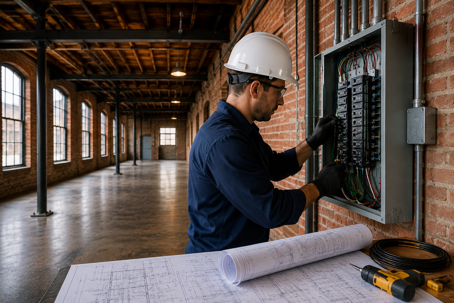
Code requires that people can safely work on energized equipment without climbing over obstacles or squeezing past doors. This means clear floor areas in front of panels and switchgear, adequate headroom, and no encroachments from other building systems. In older Dallas warehouses we often find panels tucked into stair landings, behind improperly swinging doors, or in shallow closets that met old practices but do not line up with current clearance expectations. When we upgrade services or panels, these locations often need to change, which can cascade into layout revisions if no one planned for that possibility.
Conduit routing is another area where historic construction affects modern plans. Thick masonry walls, heavy timber framing, and existing structural steel can limit where and how we run feeders and branch circuits. Architects rightly want to preserve exposed brick and original ceiling lines. If electrical pathways are not coordinated early, you can end up with surface raceways in places no one wanted them or expensive demolition to carve new routes.
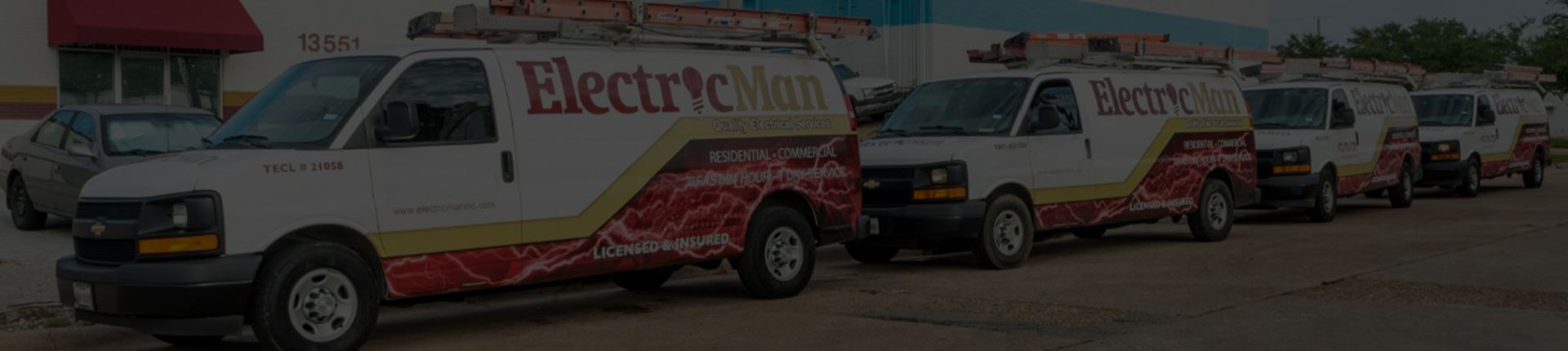
Our technicians are used to solving these problems on active commercial sites, which is why we show up with well-stocked service vans and a mindset geared toward field solutions. On a warehouse conversion, that preparation lets us respond quickly when a planned route hits an unexpected beam or when an equipment room needs to be reconfigured to meet clearances, without stopping the job for days while materials are sourced.
How Dallas Inspectors View Existing Installations Versus New Work
A common point of confusion for property owners is how far inspectors will “reach back” into an existing warehouse system during a conversion. In most cases, their focus is on new and modified work—but major changes in use or service can expand the scope of review. Understanding that line helps set realistic expectations for your project.
Existing electrical components may often remain if they are safe, accessible, and not affected by the new scope. A panel serving a small storage area, for example, may stay in place if it is not part of the renovation. However, once you add tenant spaces, upgrade service equipment, or rework layouts, inspectors are more likely to evaluate how the existing system supports the new design.
Increased scrutiny is common with:
- Tenant buildouts or occupancy changes
- Service upgrades or panel replacements
- Layout changes affecting load distribution
- Updates to life safety systems
Projects move more smoothly when there is a clear technical narrative behind the design. Load calculations, single-line diagrams, and proper equipment clearances help show how the system will safely support the new use. When documentation is unclear or relies on undersized infrastructure, reviewers are more likely to request changes during approval.
With experience across Dallas warehouse conversions, we understand the questions inspectors typically ask and design systems with that review process in mind to help reduce surprises during permitting and inspection.
Planning Ahead: Electrical Strategy for a Successful Warehouse Conversion
Given how much electrical systems drive feasibility for warehouse conversions under the 2026 code, the most effective move you can make is to bring an electrical contractor into the process early. The worst time to discover that your service is undersized or your panels cannot be reused is when walls are framed and tenants are waiting. The best time is during due diligence or schematic design, when changing course is still relatively inexpensive.
A practical sequence usually starts with an on-site walk-through and a rough load assessment. We look at existing service size, panel condition, grounding, and obvious life safety gaps. At the same time, we review your concept plans, intended occupancies, and major equipment such as kitchens, elevators, and HVAC systems. From there, we can sketch out whether the existing infrastructure can be partly reused or whether a new service and distribution are likely.
Once you have a preliminary electrical strategy, coordinating with the design team and the utility comes next. Architects benefit from knowing where electrical rooms need to be expanded or relocated before they lock in stair and corridor layouts. General contractors benefit from understanding shutdown and phasing requirements before they build schedules. Utility coordination for service upgrades can take time, so we push those conversations forward as soon as we see a likely need.
Along the way, we see the same mistakes again and again. Owners assume existing services are fine because the lights work today. Designers under-allow for life safety systems and protection devices in panel schedules. Teams wait until inspection week to find out that panel clearances are not adequate. Our comprehensive commercial capabilities and 24/7 availability are built to support projects through these pressure points, and our honest, upfront pricing helps you build a budget that reflects the real electrical scope instead of wishful thinking. When large upgrades are needed, our financing options with approved credit can also help you phase or manage those costs while still meeting modern electrical expectations.
When to Call ElectricMan About Your Dallas Warehouse Conversion
Certain signs indicate it’s time to bring in an electrical team experienced in code-heavy Dallas conversions. If your project involves transforming a low-load warehouse into a restaurant, event space, or multi-tenant office, a full electrical review should be expected. Older panels, undersized service equipment, or crowded gear installations are also strong indicators that upcoming code requirements will require more than minor adjustments.
When we get involved, we typically begin with a focused walkthrough and coordination with your design and construction teams. From there, we help identify likely service upgrades, grounding and bonding needs, life safety considerations, and any clearance or layout constraints that could impact the build.
We often help clarify:
- Where service upgrades will likely be required
- What grounding and bonding improvements are needed
- How life safety systems should be integrated
- Potential clearance or routing conflicts in the layout
This early planning helps align electrical work with your construction schedule and tenant commitments while reducing costly redesigns later in the project.
If you’re considering a warehouse conversion in Dallas—or already in design—the most cost-effective time to understand your electrical scope is at the beginning. Getting clarity early on what 2026 code updates mean for your building helps you move forward with a more accurate budget, timeline, and plan.
Call (972) 362-1804 today to talk with ElectricMan about your Dallas warehouse conversion.